
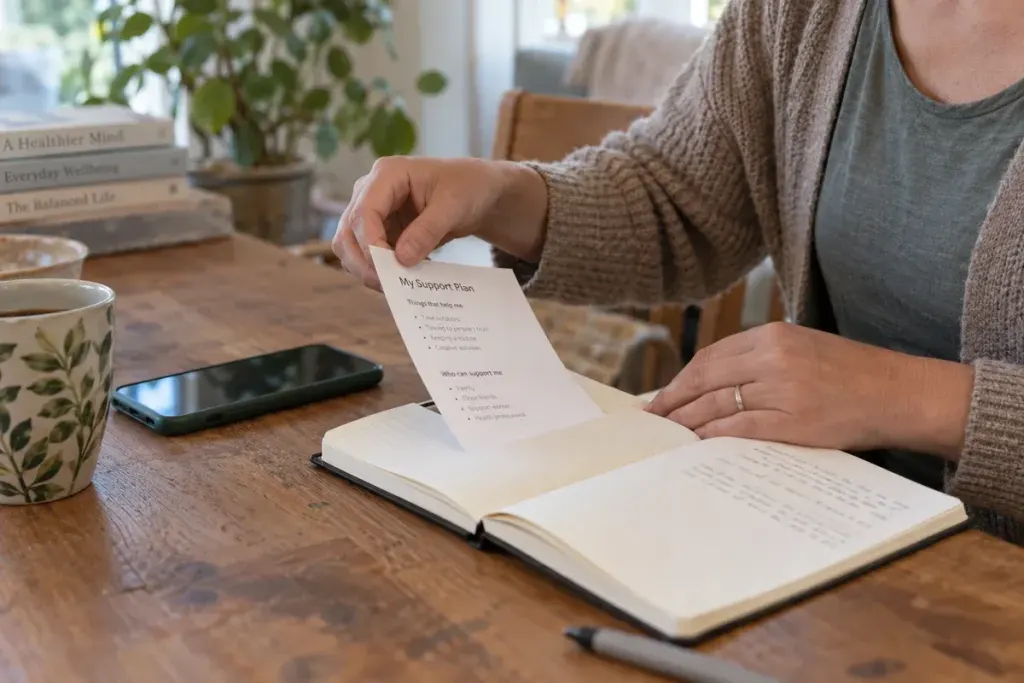
A detailed recovery folder can be useful during an appointment and impossible to navigate on a difficult evening. If an agreed plan is meant to help when concentration is low, its most important actions need to be easy to find.
Work with your treating professional or chosen recovery support to identify what belongs on a short version. It should complement the clinical plan, not become a self-designed replacement for treatment.
Use personal observations rather than a universal checklist
Changes that matter differ between people. The useful question is what you and your support team have learned to notice in your own circumstances, including patterns that have preceded difficulty before. A sign is a reason to seek support, not proof that a particular outcome is inevitable.
SAMHSA’s guidance on motivation and substance-use treatment discusses recognising warning signs and planning a response. Apply such ideas with appropriate professional support rather than copying another person’s plan.
Pair each concern with a small action
“Get help” is important but vague. An agreed action might identify whom to contact, the method to use and what to say. For example: “If I begin missing agreed check-ins, I will contact my counsellor through this verified route and tell my support person.” This is an illustration, not a clinical instruction for every reader.
Check that contact information is current and that the person has agreed to the role. Record an alternative for times when they are unavailable. Do not assume a friend can provide round-the-clock support or manage a medical emergency.
Make urgent situations visibly different
Ask the clinician to explain when symptoms or circumstances require urgent medical attention rather than the routine check-in plan. Suspected overdose, severe withdrawal or immediate danger must not wait for a scheduled conversation. Use local emergency services as appropriate.
Do not change medicines or attempt withdrawal management on the basis of a brief worksheet. If instructions are unclear, ask the treating professional to clarify them while you are preparing the plan.
Choose where the short version lives
A discreet paper copy, an accessible phone note or another preferred format may work. Balance availability with privacy, and decide who may have a copy. Date it and review it after relevant changes or appointments.
The value lies in reducing the number of decisions needed at a difficult moment. A short, current plan with an agreed next step can be more useful than a polished document nobody can find.