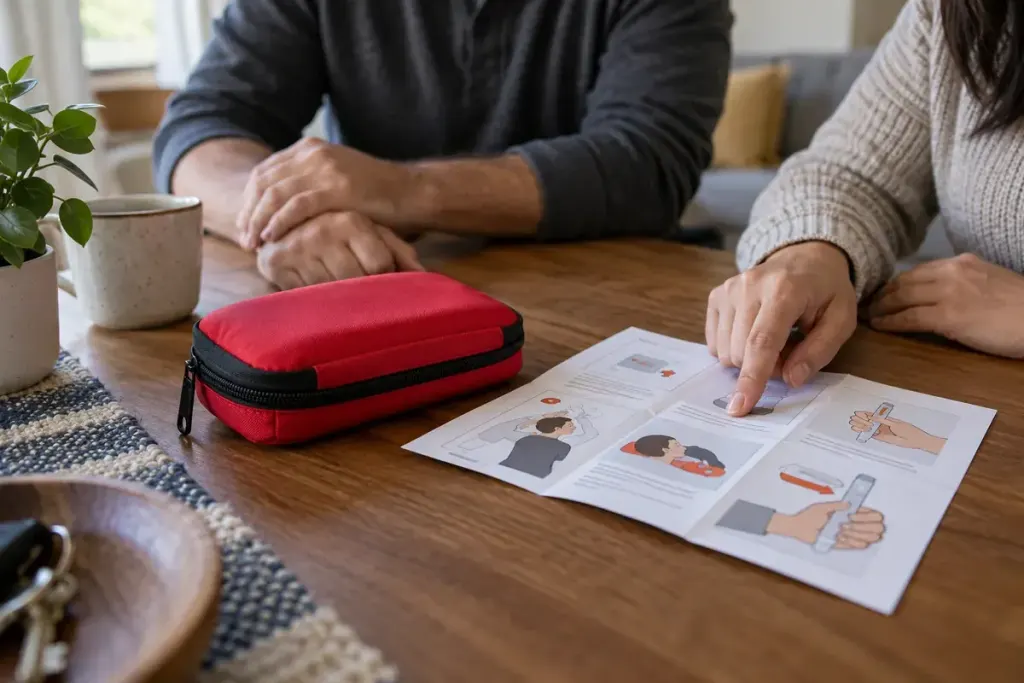
A naloxone kit is easier to find and use when someone has checked it before an emergency. That check is a short maintenance task: where the kit is, whether its packaging is intact, and when it needs replacing.
The CDC/NIOSH guidance on workplace naloxone programmes discusses storage, training, and replacement. For your particular product, follow its current label and instructions. Storage limits and presentations differ, so a temperature remembered from another kit should not replace the instructions on yours.
Make a replacement plan, not just an expiry note
Read the expiry date while there is time to obtain a replacement. Set a reminder early enough to contact the pharmacy or local programme that supplies the kit. Leave the medicine in its original packaging, with its instructions available, and avoid locations where heat, cold, or moisture conflict with the label.
A small record can say: “Checked today; stored in the agreed location; replacement contact confirmed.” It does not need anyone’s diagnosis or treatment history. If more than one person relies on the kit, make sure they know where it is and how to get appropriate training.
Ask a pharmacist or supplying programme about damaged packaging, uncertain storage, or a kit that has been used. Do not assume that putting a damaged product back into the bag makes it ready for next time. Training devices should be clearly distinguished from usable medication.
During a suspected overdose, seek emergency help immediately and follow emergency-service and product instructions; do not delay help to perform this maintenance checklist. The value of checking beforehand is that practical uncertainties have already been reduced. A kit should be accessible when needed, with people prepared to act rather than searching for a missing leaflet.